Our Story
Borinquen Trading Company began with a name that is also a homecoming. Borinquen — Borikén — is the Taíno name for Puerto Rico, and for Frank Torres, who was born in Ponce and grew up in Sabana Grande, it still means home. Now living in Florida, he started this small, family-run shop to share pieces of that home: the food of a Puerto Rican Christmas and art drawn from Taíno roots. What follows is his story, in his own words — the places, the table, the music, and the people he carries with him.
Frank's story, in his own words
Where he's from
Ponce sits on Puerto Rico's southern coast, and Sabana Grande and Mayagüez are in the island's southwest and west — a part of Puerto Rico known for its beaches, its rivers, and the green mountains of the Cordillera Central rising behind them. For many Puerto Ricans, home is not one town but the whole landscape around it: the coast, the mountains, and the family gathered in between.
“Born in Ponce, Puerto Rico, but I grew up in Sabana Grande en Mayaguez, mostly Sabana Grande, Puerto Rico.”
His fondest memories of the island
In Puerto Rico, a day by the river or at the beach is often a whole family affair — food packed, chairs set out, children swimming while the adults cook and talk, and nobody in a hurry to leave. The rivers that run down from the mountains are cool and clear, and gathering beside them is one of the island's oldest and simplest pleasures: being together, outside, with nowhere else to be.
“My most fond memories of Puerto Rico was the beach and the clean rivers. Love the mountains and hanging out with my family. We always had awesome cookouts in the river, we were swimming around, and it was just such a beautiful experience to have so many family members around enjoying with me.”
Nochebuena at home
Nochebuena — Christmas Eve, December 24 — is the heart of Christmas in Puerto Rico, often a bigger gathering than Christmas Day itself. At its center is lechón asado, a whole pig roasted slowly, usually overnight, until the skin is crisp; around it come arroz con gandules, pasteles, and coquito, with music and family spilling from one day into the next. It is a celebration measured not in hours but in days, and the cooking — done together, over a long time — is part of the celebration itself.
“Christmas was a special time at home. Nochebuena especially — my daddy would kill a lechon and he would roast them, usually overnight. We would wake up the next day, it was half roasted, and the party just went on for usually two, three days. The men drank a lot and partied and laughed, and the women enjoyed and made all kinds of food. I loved my mother’s food — her rice was amazing — and every other traditional stuff they cooked. I learned to cook with her, watching.”
His mother’s sour steak
“My mother had many dishes that I loved, but I think the one that I always will keep in — my children now love it — is our sour steak, or her sour steaks. It’s basically pounded steak with lots of onions, and it’s a vinegar-based sauce and olive oil. Just absolutely delicious over white rice and beans. Absolutely awesome.”
In many Puerto Rican homes, cooking is learned the way Frank describes it: by watching, standing beside a mother or grandmother at the stove, until a dish becomes part of you. White rice and beans are the everyday plate everything else is served over, and a dish a mother makes well can become a family inheritance — one her children ask for, and then make for their own children.
His coquito story
Coquito is Puerto Rico's Christmas drink: a sweet, coconut-based drink, usually made with rum, served cold through the holiday season. Almost every family has its own version, and the recipe is often closely guarded — passed from parent to child, argued over, and judged against everyone else's. Pitorro, the strong, traditionally homemade Puerto Rican rum Frank's father used, is the old-school base for it, made in the island's sugarcane tradition.
“I think the first coquito I ever had was from my dad. He used to make it with pitorro, obviously, because that was what he was best with. But nowadays I make my own, and my kids and everybody around me always ask for it every year, so I make lots of it. My wife will not drink coquito from anybody else but me — anybody else’s has things in it that don’t go in there — but my coquito is legendary.”
Parrandas
A parranda is a Puerto Rican Christmas tradition: a group of friends arrives at a house, often unannounced and late at night, singing Christmas songs with guitars, güiros, maracas, and cuatros, and the household joins in — with food, drink, and song — before the whole group moves on to the next house. The parranda grows as it goes, house by house, and it can run until morning. It is music, surprise, and friendship, all in one night.
“Parrandas remind me of my teenage years, hanging out with my friends, and we used to make parrandas all the time and go partying in people’s houses till the next day. It was great. I have so many stories on that. They were amazing.”
Why “Borinquen”?
“Why Borinquen? Because that is my homeland, because it means so much to me — that little island in the middle of nowhere. It’s home. It’s where I grew up. It’s where I first laughed and cried, kissed. I just love the island.”
Borinquen is more than a name on a map. It is the word Puerto Ricans reach for when they mean home itself — it is in the anthem, La Borinqueña, in songs and poems, and in the way people across the diaspora describe where they come from. To call a company Borinquen is to say, before anything else, where your heart is.
What he misses most, living in Florida now
Puerto Rico's west coast is the quieter side of the island, where a beach or a river can be empty on the right day — just water, green, and sky. At night, the island's other sound takes over: the coquí, the tiny tree frog whose call is the sound of home for Puerto Ricans everywhere, and a symbol of the island in art and song. What many Puerto Ricans in Florida miss is not noise or crowds, but that particular quiet — nature close by, and nobody else around.
“Yes, I live in Florida now. But what I miss the most is the beaches and the quietness, and how serene they were. The island is not very inhabited in some areas, especially on the west side, so if you pick the right days there will be nobody at the beach but you. Also in the rivers, the same — there will be nobody at the rivers. It’s just you and nature. I really miss that very much.”
What he wants someone to feel when they buy from Borinquen
“I want people to feel when they purchase from us like a kiss of the abuela, like a hug from your mom and your tía, like a smile from your dad and a hug from your cousin — like a plato de lechón, pasteles y arroz con gandules were placed in front of you with love! And I want them to know, from Boricua to Boricua — or friend — that we appreciated it very much, and we give them love back as only Boricuas know.”
The plate Frank names is the Puerto Rican Christmas table in miniature. Arroz con gandules — rice with pigeon peas — is the classic holiday side; pasteles, parcels of grated green-banana and plantain masa wrapped in banana leaves, are labor-intensive and traditionally made in large batches for Christmas; and lechón is the centerpiece they are served beside. In Puerto Rican homes, food like this is not just a meal — it is how love is shown, and how family says, without words, that you belong here.
More of Frank’s story coming
Still to come
Frank is still answering interview questions — what success looks like in a year, and more family stories.
None of Frank’s story on this page is invented. The quotes above are Frank’s exact words. No other personal details, quotes, memories, or family stories appear here until they come from Frank himself.
The word itself
Borinquen (also spelled Borikén) is the Taíno name for Puerto Rico — the name the island's Indigenous people gave it long before it was called Puerto Rico. It means, roughly, “land of the valiant lord.” For Puerto Ricans on the island and across the diaspora, the word is a piece of home: it shows up in songs, in poetry, in the anthem — La Borinqueña — and in the word Boricua itself.
The company carries that name because that is what it sells: pieces of home. The food of a Puerto Rican Christmas. Art drawn from the Taíno petroglyphs. And, when Frank tells it, the real story behind it all.
What this company is
Borinquen Trading Company is a small, family-run shop. It starts with two things:
- Digital products — starting with Navidad Boricua, a Puerto Rican Christmas cookbook and celebration guide.
- Print-on-demand Taíno art — original designs on T-shirts, printed one at a time so nothing sits in a warehouse.
The plan is simple: sell things that are real, be honest about where they come from, and grow slowly enough to keep it that way.
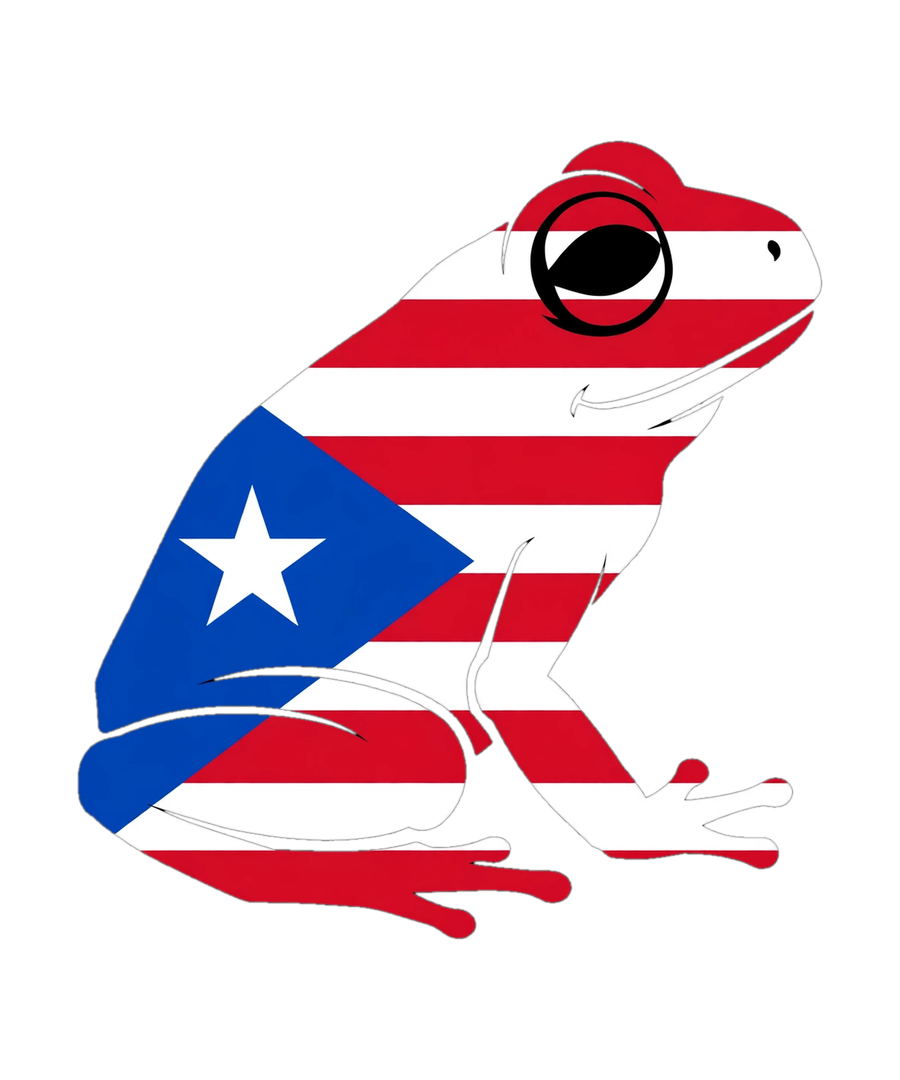
That is what Borinquen Trading Company is for: a way to bring a piece of that home to people who miss it, and to share it with people who have never tasted it. The cookbook carries the food of a Puerto Rican Christmas; the art carries the Taíno roots and the island's colors; and behind both is the story above, told in Frank's own words. If you buy something here, you are not just buying a product — you are sitting down, for a moment, at that table, with that family, on that island. From Boricua to Boricua — or friend — thank you, and welcome home.